
Introduction
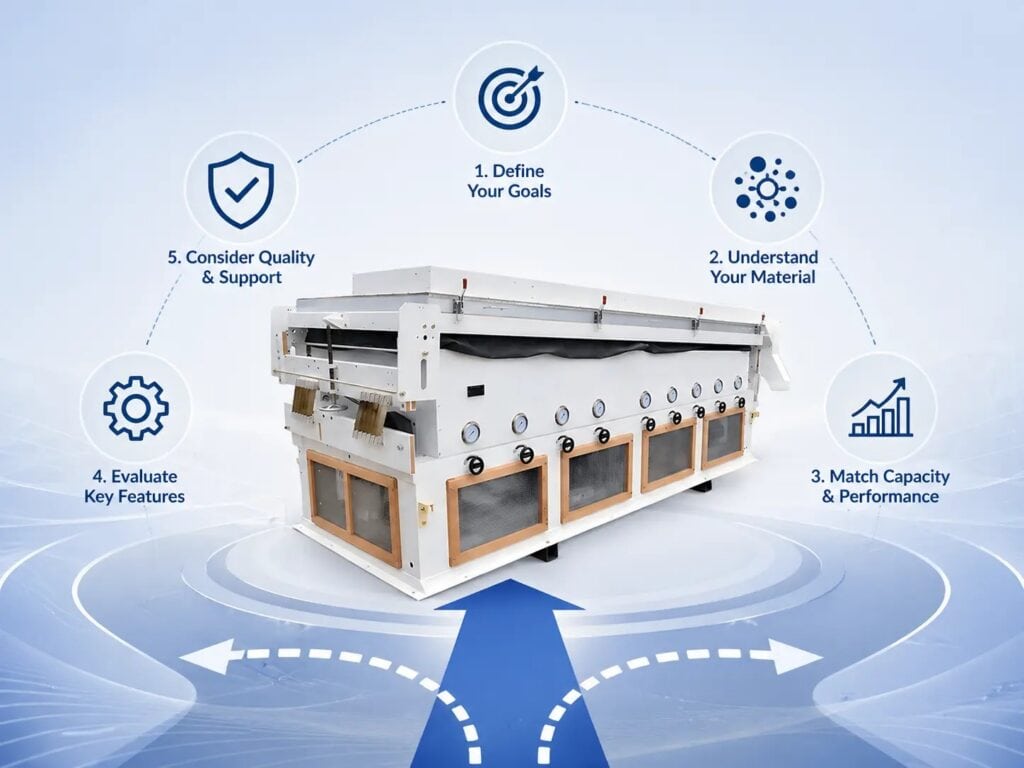
Choosing the right gravity separator can significantly impact your processing results.
But with different models and configurations available, how do you select the right one?
Key Factors to Consider
1. Material Type
Different seeds behave differently:
- Wheat → medium density
- Grass seeds → light and irregular
- Paddy → requires precise separation
👉 Your equipment must match your material characteristics.
2. Capacity Requirements
Gravity separators must be sized according to your processing line:
- Small plants → 1–5 TPH
- Medium plants → 5–10 TPH
- Large industrial lines → 15+ TPH
3. Separation Accuracy
Higher precision machines provide:
- Better germination results
- Higher product quality
- Less reprocessing
4. Stability and Control
Look for machines with:
- Adjustable airflow
- Stable vibration system
- Easy operation
5. Integration with Existing Line
Your separator should integrate smoothly with:
- Cleaning equipment
- Conveying systems
- Coating or packaging units
Common Mistakes to Avoid
❌ Choosing based on price only
Low-cost machines often lead to poor separation results
❌ Ignoring material characteristics
Different seeds require different configurations
❌ Underestimating capacity
Undersized machines cause bottlenecks
Pro Tip
Always test your material or consult an experienced supplier before selecting a model.
Conclusion
Selecting the right gravity separator is not just about equipment — it’s about achieving the best processing results.
Need help selecting the right model?
Share your material and capacity, and we’ll recommend the best solution.